
The Hidden Threat Beneath the Waves: Securing the Global Network Of Undersea Internet Cables

As The World Becomes Increasingly Dependent On The Internet, The Vulnerability Of Undersea Cables Poses A Significant Risk To Global Communication And Security.
In January 2022, the volcanic eruption of Hunga-Tonga-Hunga-Ha'apai sent shockwaves across the Pacific, both literally and figuratively. This catastrophic event not only blanketed the island nation of Tonga in ash but also severed its sole undersea internet cable, plunging the country into digital darkness at a critical moment. The incident highlighted the fragile and often overlooked infrastructure that underpins the modern internet—the global network of undersea cables.
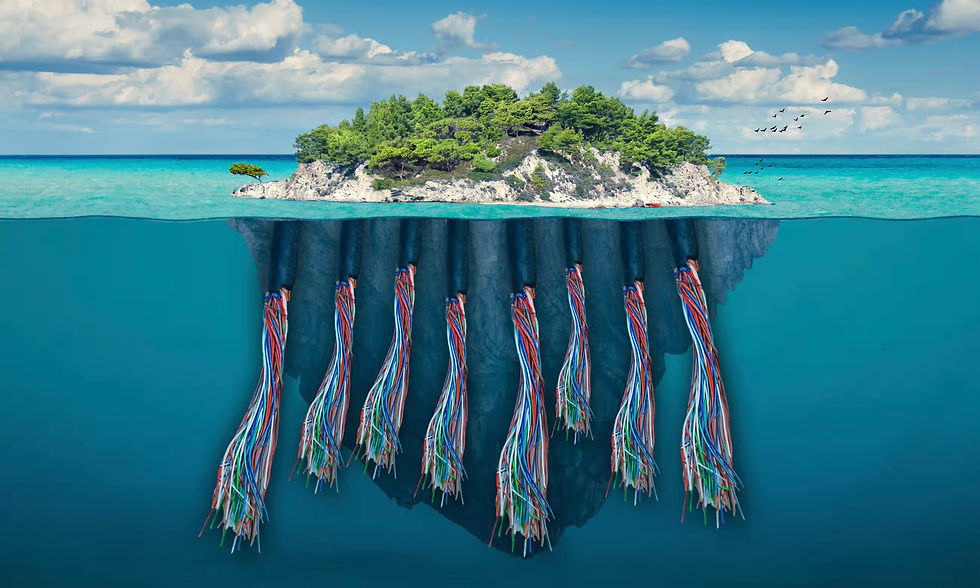
While many people envision the internet as a wireless entity floating in the "cloud," the reality is that nearly all global internet traffic—whether Zoom calls, streaming movies, or social media updates—travels through an intricate web of fiber optic cables lying on the ocean floor. Stretching over 1.5 million kilometers, these cables are the lifelines of the digital age, connecting continents and ensuring the flow of data across the globe.
Despite their crucial role, undersea cables are vulnerable to a variety of threats, both natural and man-made. The eruption in Tonga was a stark reminder of how a single event can disrupt the internet for an entire nation, with far-reaching consequences for businesses, governments, and individuals. The disruption hampered recovery efforts and devastated the local economy, much of which relies on remittances from abroad.

The potential for disruption isn't limited to natural disasters. In recent years, concerns have grown over the security of undersea cables, particularly in the context of global geopolitical tensions. Russian submarines have been observed monitoring these cables, raising fears that they could be targeted in acts of sabotage. Similarly, the possibility of adversaries tapping into the cables to intercept sensitive communications has alarmed governments and security experts.
The US and its allies are particularly concerned about the potential for espionage. A 2022 congressional report highlighted the increased risks posed by countries like Russia and China gaining access to undersea cable systems. This fear is not unfounded; in 2013, documents leaked by whistleblower Edward Snowden revealed that the UK's GCHQ had tapped into undersea cables to collect vast amounts of data, sharing the information with the US's NSA.

Yet, despite these risks, some experts argue that the threats may be overstated. A 2022 EU report noted the lack of verified incidents of deliberate attacks on undersea cables, suggesting that the fears of sabotage could be exaggerated. Instead, the data shows that accidental damage—caused by anchors, fishing activities, or even sharks—poses a more significant threat to the global internet infrastructure. On average, a cable is severed every three days, leading to disruptions that can have costly consequences. For instance, in 2017, a ship off the coast of Somalia accidentally cut a submarine cable, resulting in a three-week internet outage that cost the country $10 million per day.
The uneven distribution of undersea cables is another pressing issue. While the North Atlantic Ocean is densely connected, providing multiple routes for data transmission between the US and Europe, other regions are far less equipped. The South Pacific, in particular, has a sparse network of cables, leaving countries like Tonga highly vulnerable to disruptions. In contrast, Guam, with a population of just 170,000, is connected by more than 10 cables due to its strategic importance as a US naval base.

The eruption in Tonga spurred governments and tech companies into action, leading to increased efforts to strengthen the resilience of the undersea cable network. However, despite these initiatives, the fundamental problem remains: without the economic incentive to build more robust and diverse networks, regions like Tonga will continue to face the risk of being cut off from the digital world.
The promise of the internet is one of global connectivity and digital equity, but this promise is undermined by the vulnerabilities and disparities in the undersea cable network. As the world becomes ever more reliant on digital communication, securing this hidden infrastructure is not just a matter of convenience—it's a necessity for ensuring that no region is left in the dark.
Conclusion:
The internet is a lifeline for modern society, but its infrastructure is far more fragile than most realize. The global network of undersea cables that powers the internet is vulnerable to natural disasters, accidental damage, and even potential sabotage. To ensure the promise of digital equity, there must be a concerted effort to strengthen and diversify this infrastructure, particularly in underserved regions.
Visit Dan Lalonde Films For All Technology And Entertainment News
Source: The Guardian
Photo Credit: Reuters



Comments