
Trump Officials Mistakenly Add Journalist To Yemen Strike Group Chat On Signal App
- Dan Lalonde
- Mar 24, 2025
- 2 min read
Updated: Mar 26, 2025
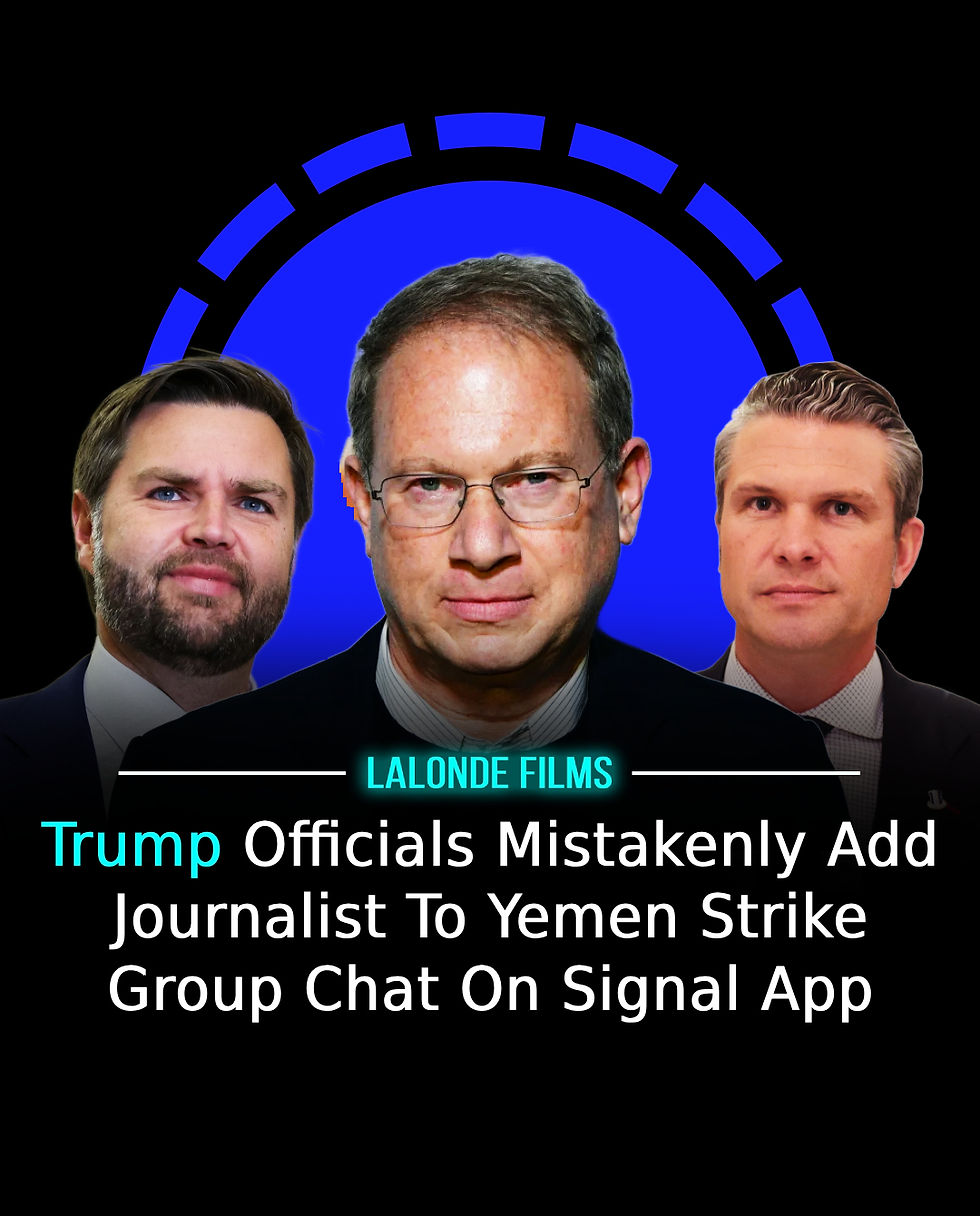
Remember Watergate? You would think after that event politicians would be more careful when they are talking about highly classified information. ln a surreal turn of events, journalist Jeffrey Goldberg found himself unwittingly looped into one of the Trump administration’s most sensitive military planning discussions—via a simple Signal message.
It began with a connection request from an account labeled “Michael Waltz,” Trump’s National Security Adviser, followed by Goldberg being added to a group titled “Houthi PC small group.” The group appeared to be a digital forum for high-level U.S. national security officials, including Secretary of Defense Pete Hegseth, Secretary of State Marco Rubio, and others, discussing imminent strikes on Houthi targets in Yemen.
At first, Goldberg suspected a prank, misinformation attempt, or a simulation. But as the thread progressed, it became clear he was witnessing real-time deliberations over war, complete with precise strike details, military assets, target lists, and timing.
Even Vice President JD Vance weighed in, expressing concern over timing and public perception. The conversation revealed internal divisions over the necessity and optics of the strike, as well as frustration over Europe’s role in international security. Most shocking: not one participant noticed that “JG”—Jeffrey Goldberg—was an unauthorized observer.
On March 15, the attack happened exactly when the thread said it would. The aftermath? Praise, emoji-laden affirmations, and chillingly casual references to the operation's success—including reported casualties. The fact that these messages were shared on an unclassified, commercial messaging app raises deep concerns about operational security, federal records laws, and potential Espionage Act violations.
Ultimately, the National Security Council confirmed the chat’s authenticity. While calling it a demonstration of coordination, critics and legal experts say it was a profound security lapse. That a journalist sat quietly in a digital war room without being noticed is less a scoop—and more a sign of systemic failure.
In an age where national security hinges on both digital discretion and operational integrity, breaches like this blur the line between satire and scandal. If your organization handles sensitive communications, cybersecurity isn't optional—it's mission-critical.
Despite its popularity among journalists, activists, and even some government officials, Signal is not approved for transmitting classified information. While the app offers strong end-to-end encryption and features like disappearing messages, it lacks the security infrastructure mandated for handling national defense data. In rare cases, federal officials may use Signal for unclassified logistical coordination, especially while traveling.
But using it to discuss active military operations bypasses government protocols—and introduces serious risk. If any of the phones involved had been hacked, stolen, or compromised, adversaries could have accessed real-time intelligence about troop movements, strike plans, and covert assets. This kind of exposure could endanger lives and severely damage national security efforts.
Visit Dan Lalonde Films For All Technology And Entertainment News
Source: The Atlantic
Photo Credit: Getty Images


Comments